The Men Who Came Out of Pyro
Inside XenoThreat, the outlaw movement turning Human fear into interstellar war
By the time the first broadcast tore across Stanton’s public displays, most people had already learned to ignore the warnings.
That is one of the great luxuries of living in a corporate system: every emergency arrives dressed like a marketing campaign. Transit delays. Security alerts. Customs advisories. Missing-person notices. Hostile activity near a Lagrange point. Another advisory from another authority reminding you that everything is under control, which is usually the first sign that it is not.
Then the screens changed.
In landing zones, at terminals, in the quiet blue glare of public concourses, the same voice began to speak. It did not sound like a pirate demanding ransom. It did not sound like a gang marking territory. It sounded rehearsed, almost priestly, the voice of a man who had spent long nights alone learning how hatred should breathe.
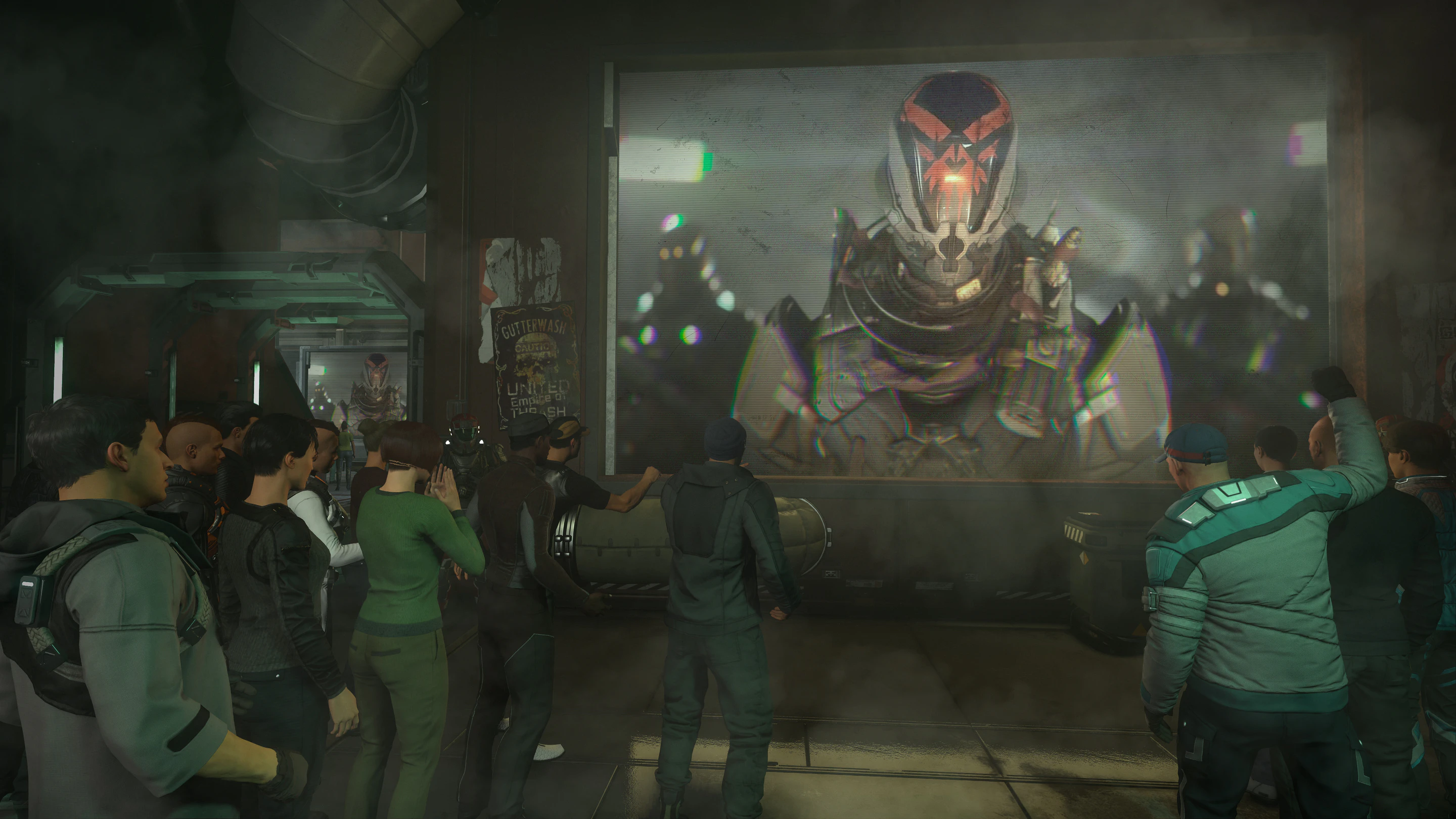
“People of Stanton,” it began.
The rest was accusation.
The Empire had sold them. The corporations had consumed them. The aliens had infiltrated them. Humanity, once mighty, had been carved into shares and freighted across the border in the name of trade. Stanton, that glittering private kingdom of factories, shipyards, cloud cities and frozen research compounds, would be the first step in a revolution to reclaim the soul of the Empire.
Then came the name.
XenoThreat.
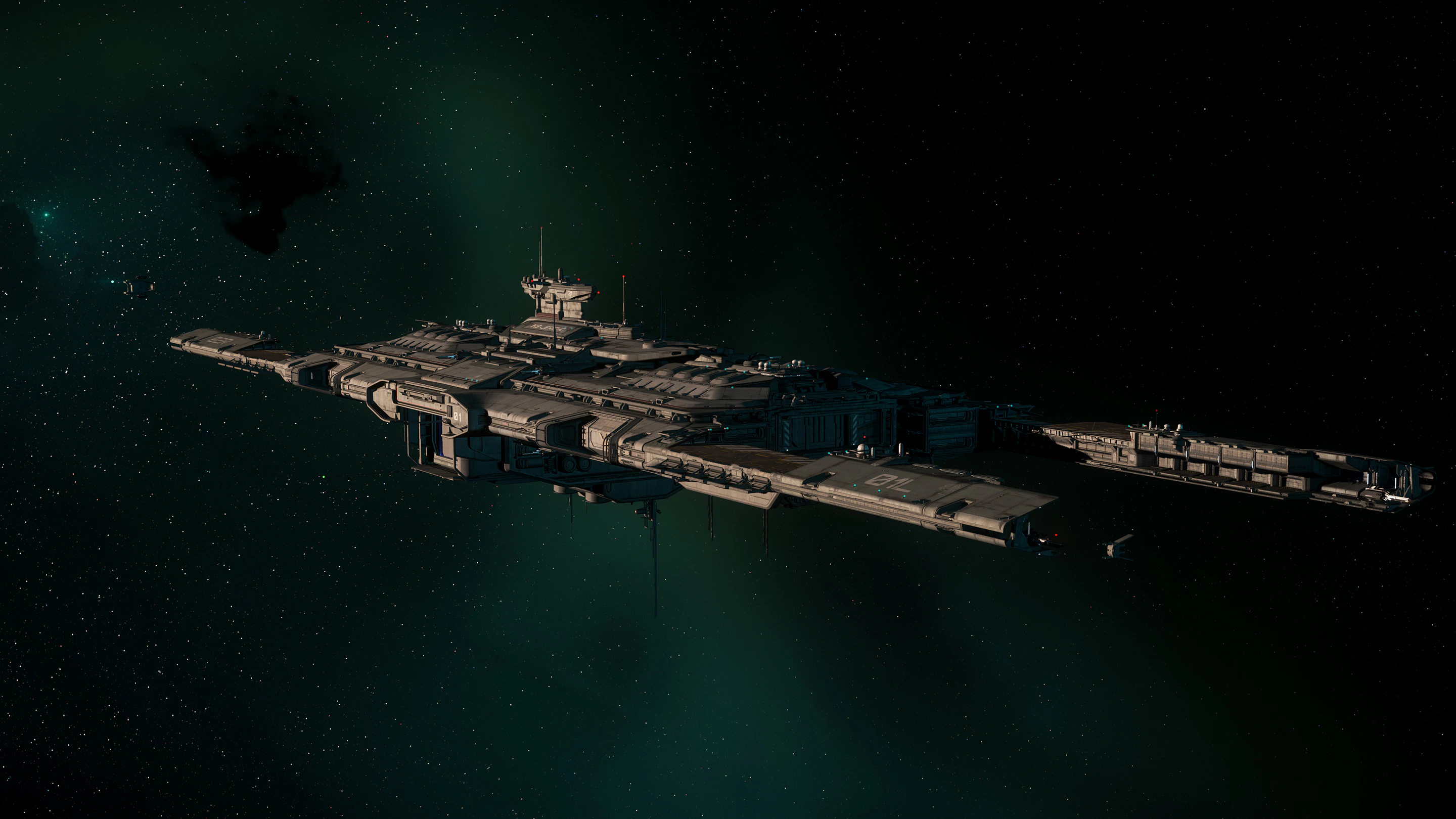
The word has since been said so often by security contractors, Advocacy spokespeople, Navy briefers, bounty hunters, terrified haulers and too many half-drunk bar philosophers that it has begun to lose its shape. XenoThreat. XT. The Xenos. The men from Pyro. The bastards at Jericho. The ones with the Idris. The ones who shot the convoy. The ones who do not steal cargo so much as make a sermon out of burning it.
But names are useful only when they clarify. This one does not. It flattens the thing.
XenoThreat is not merely a gang. Gangs are transactional. They steal, smuggle, extort, murder and lie, but most of them still understand the cold arithmetic of survival. XenoThreat kills like it is trying to teach history a lesson.
That is what makes them dangerous.
Not their ships, though they have ships. Not their guns, though they have plenty. Not even their apparent stockpile of ex-military discipline, which hangs around them like cordite. What makes XenoThreat different is that they have discovered the one weapon every dying empire fears most: a story simple enough to recruit with and violent enough to die for.
The story begins in Pyro, because of course it does.
Pyro is not a system so much as a warning label with planets. A flare star. Failed industry. Abandoned infrastructure. Half-habitable rocks. Derelict platforms. Men and women living in places no government can properly police and no corporation ever truly meant to save. It is the sort of place the Empire remembers only when someone fires a missile out of it.
Ruin Station, orbiting Terminus, was not built to become the spiritual sewer of an outlaw system. It was built as MacEwan Station, a corporate processing hub for Pyrotechnic Amalgamated. That is the old joke of human expansion: first comes optimism, then debt, then bankruptcy, then someone with a rifle moves into the abandoned office and declares himself king.
When Pyrotechnic Amalgamated collapsed and left the station behind, Ruin became exactly what its name promised. Squatters arrived first. Then smugglers. Then dealers. Then doctors who did not ask questions because questions have a way of getting expensive in Pyro. Then gangs, inevitably, because wherever desperate people gather around oxygen, medicine and fuel, someone will decide they own the queue.
Ruin Station has passed through more hands than a contraband pistol. The Abyss. The Ikkibu. The Lowside Tomahawks. Headhunters. Rough & Ready. Names flare, burn, and vanish. Control of Ruin is never permanent; it is rented in blood.
For several years, XenoThreat held it.
That fact matters less as real estate than as mythology. Ruin Station is not merely a base; it is a throne made from bad air, bad wiring and worse decisions. To rule Ruin is to send a message to every outlaw in Pyro: we are not hiding here, we are governing here. XenoThreat understood that. They did not simply occupy the station. They used it as a furnace.
Out of that furnace came raids.
For years, Pyro’s violence mostly stayed inside Pyro, where the Empire could file it under “unclaimed system instability” and sleep soundly. That was the old arrangement. The outlaws kept their wars dirty and local. The corporations kept their insurance premiums tolerable. The Advocacy issued warnings. Everyone pretended the border was a wall.
XenoThreat broke the arrangement.
By 2949, reports began spreading of raids in systems connected to Pyro. Stanton. Terra. Places with cameras. Places with voters. Places where a dead crew was not just a dead crew but a political event.
Then came the convoy.
The details remain obscene in their simplicity. A corporate convoy bound for Terra was ambushed in Stanton. The cargo was destroyed. The crew were publicly executed as “collaborators of corporate greed.” That phrase is important. Pirates kill witnesses. Terrorists kill symbols. XenoThreat did not want the cargo. They wanted the audience.
The Navy responded by dispatching the UEES War Hammer, a Javelin destroyer, to help contain the threat. That, according to officials, appears to have been precisely what XenoThreat wanted.
The trap was not subtle, but subtlety is overrated when you have already convinced your enemy that you are merely rabble. When the War Hammer moved to restock at INS Jericho, supply vessels were intercepted and destroyed. Volatile cargo was scattered into the dark. The Navy, short on options and long on urgency, called in the Civilian Defense Force.
This is where the official histories tend to become heroic. Volunteers answered the call. Cargo was recovered under fire. Fighters screened haulers. Idrises were engaged. Stanton rallied. The invaders were pushed back.
All of that is true.
It is also incomplete.
What happened at Jericho was not simply a battle. It was a revelation. XenoThreat demonstrated that it could force the Navy into choreography. It could strike a convoy, provoke a response, predict the resupply, disrupt the logistics chain, and then use the delay to bring capital-class warships into Stanton. That is not drunken piracy. That is planning.
Somewhere behind the bombast and the racial bile sits an operations staff.
This is the uncomfortable part, the part officials rarely linger on because it raises questions that stink up the room. Advocacy assessments have long suggested that XenoThreat is composed in significant part of corrupt former UEE military. Anyone who watched the Stanton incursion unfold could see the fingerprints. Coordinated strikes. Priority targeting. Use of supply disruption to shape the battlespace. Propaganda timed to precede kinetic action. They do not fight like men who learned war from bar fights and stolen manuals.
They fight like men who once wore uniforms and decided the Empire betrayed them.
That betrayal is the emotional engine of XenoThreat. Their politics are ugly but not incoherent. They speak to citizens who feel sold out by corporations, abandoned by the Senate, and diminished by alien trade. They take real anxieties and feed them through a grinder until only hatred remains.
The Human-Xi’an Trade Initiative gave them their scripture.
HuXa was sold, depending on who was speaking, as diplomacy, opportunity, modernization, an economic bridge, a post-Messer maturity test, or a quiet surrender dressed in fiscal language. Across the Empire, it generated exactly the kind of anxiety that demagogues pray for. Anti-HuXa protests targeted Xi’an-owned CTR stations. Boycotts were urged against Xi’an corporations such as Aopoa and Torral Aggregate. Even Human companies with Xi’an ties, including MISC, found themselves dragged into the rhetoric.
For most opponents, HuXa was policy. For XenoThreat, it was proof.
Proof that the UEE was selling Humanity piece by piece. Proof that corporate interests had replaced Human destiny. Proof that the Xi’an were not trading partners but invaders with invoices. Proof, above all, that only violence remained honest.
That is the genius and sickness of the movement. XenoThreat did not invent xenophobia. It organized it. It gave it patches, ships, slogans, targets and a route map from Pyro to Stanton.
Listen closely to their broadcasts and you can hear the recruitment pitch beneath the threat. They are not speaking only to soldiers. They are speaking to the refinery worker who thinks the company town took everything. To the hauler stuck behind new customs queues while foreign corporations profit. To the veteran who came home from imperial service and found the slogans hollow. To the citizen who does not hate aliens yet, not fully, but has begun to wonder why every change seems to arrive from above and cost him something.
Movements like XenoThreat are built in the gap between grievance and explanation. They offer both. Your life is harder because they sold you. Your future is smaller because aliens bought it. Your anger is righteous because Humanity itself is under attack.
From there, atrocity becomes civic duty.
This is why treating XenoThreat as a mere security problem misses the point. Yes, their ships must be destroyed. Yes, their raids must be stopped. Yes, Stanton cannot function if every convoy becomes a referendum on interspecies trade. But the organization survives because it is more than its fleet. Pyro can replace ships. Ruin can mint martyrs. Propaganda can turn defeat into evidence of conspiracy.
Every time XenoThreat is driven from Stanton, their message returns first.
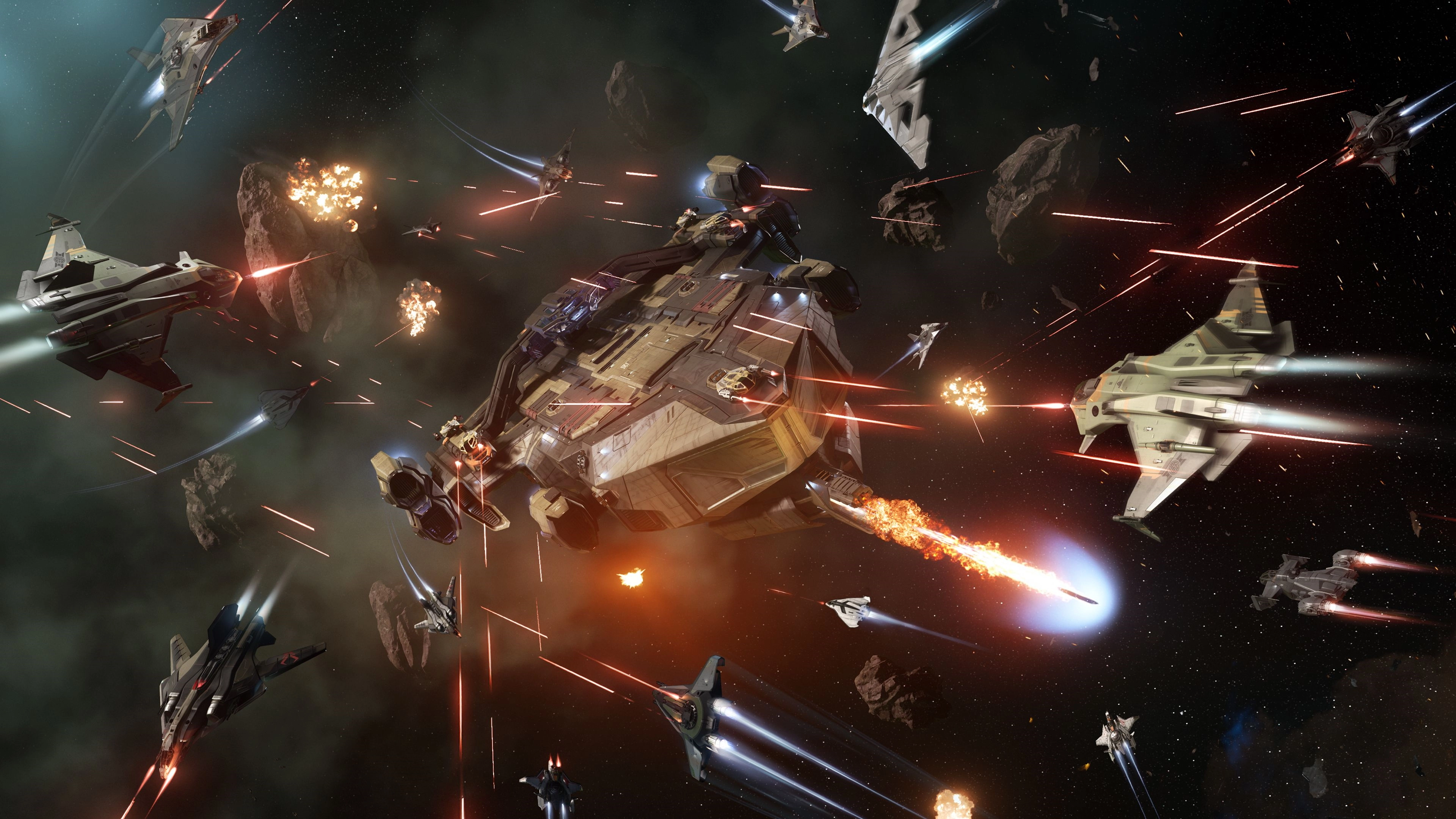
The Empire has a habit of congratulating itself too early. After the first major incursion was repelled, officials declared Stanton safe. In the narrow sense, they were right. The immediate threat had been contained. The War Hammer survived. Jericho held. The CDF proved that civilians, when properly organized and sufficiently motivated, could become a decisive force against an outlaw assault.
But “safe” is a dangerous word in Stanton.
Safe for whom? For how long? Under whose protection? A system owned by corporations and defended in crisis by volunteers is not exactly a monument to imperial stability. XenoThreat sees that weakness clearly. It is the crack they keep driving their knife into.
Their later operations follow the same moral pattern even when the tactical shape changes. Incursions. Surveillance. Priority targets. Supply disruption. Pressure on infrastructure. Attempts to make Stanton feel less like a home and more like a front line. They do not need to conquer the system to succeed. They only need to make its people believe conquest is possible.
The deeper horror is that XenoThreat may not want to govern Stanton at all. Governing is hard. Governing requires sanitation, payroll, arbitration, maintenance schedules, tax policy and the spiritual death of every revolutionary fantasy. XenoThreat is much better at the other thing: rupture.
They are not building a state. They are trying to detonate faith.
Faith in the Navy. Faith in the Advocacy. Faith in the corporations, though God knows the corporations do not make that difficult. Faith in peaceful coexistence. Faith that the Empire, whatever its failures, still has enough connective tissue to keep the old monsters from crawling back into the light.
Because make no mistake, XenoThreat is an old monster in new armor. The Empire has seen this song before. Human fear of the alien has a long and profitable history. During darker centuries, leaders learned that nothing fattens military budgets or silences dissent quite like the shape of an enemy at the border. The Xi’an were used that way before. So were the Tevarin. So are the Vanduul now, though in that case the terror requires less invention.
XenoThreat inherits that legacy and strips away the polite casing. No senatorial language. No strategic posture. No diplomatic hedging. Just the raw nerve: Humanity is pure, aliens are contamination, corporations are traitors, and violence is remembrance.
It is tempting to call them fringe. It is also lazy.
Fringe groups do not repeatedly threaten Stanton. Fringe groups do not coordinate capital ship deployments. Fringe groups do not force Navy logistics into crisis. Fringe groups do not become the reason ordinary haulers learn the silhouette of an Idris by heart.
The better question is not how many XenoThreat members exist. The better question is how many people hear their message and do not turn it off immediately.
In Lorville bars, Area18 habs, Crusader platforms, microTech worker dorms, and every grim little refuel stop where citizens mutter that the Empire has forgotten them, XenoThreat’s propaganda does not need to win a majority. It only needs to find the lonely, the furious, the humiliated and the armed.
Pyro supplies the sanctuary. HuXa supplies the grievance. Stanton supplies the stage.
The rest is recruitment.
There is, however, another truth that should not be softened: XenoThreat has failed. Repeatedly. Stanton has not fallen. The Navy has not fled. The CDF has not withered. Citizens, mercenaries, haulers, medics, gunners, salvagers and lunatics with more courage than caution have answered the call again and again. Whatever XenoThreat believes about the rot of the Empire, its attacks have often produced the opposite of what it intended. They have reminded Stanton’s people that they can still act together.
That may be the one thing XenoThreat hates more than aliens.
Not because unity is sentimental. Because unity is strategically inconvenient. A divided Stanton is easy to terrorize: Hurston blames ArcCorp, Crusader blames regulators, microTech locks its doors, independent operators keep their heads down, and Pyro’s raiders move through the gaps. But a Stanton that responds collectively becomes something harder to intimidate. Messier than the Navy. Faster than the Senate. Less predictable than corporate security. A system of civilians who have been frightened, angered, paid, and given coordinates.
That is not a permanent defense. But it is not nothing.
Still, the pattern should worry anyone paying attention. XenoThreat retreats, regroups, returns. Ruin changes hands, yet the ideology survives. Pyro shifts, yet the launch point remains. Each defeat becomes another sermon. Each new incursion proves, in their telling, that the war was never over.
Maybe that is the final lesson.
XenoThreat is not an invasion from outside Human civilization. It is a symptom from within it. A movement born from abandoned systems, failed institutions, imperial trauma, economic resentment and the ancient Human talent for blaming the stranger before looking at the structure. It came out of Pyro, yes — out of the flare light and the rust, out of Ruin’s corridors and the black market clinics, out of the places respectable people prefer not to map too carefully.
But Pyro did not create XenoThreat alone.
The Empire helped. The corporations helped. The Senate helped. Every forgotten veteran, every disposable worker, every citizen told to celebrate a future they could not afford helped make the soil a little richer.
XenoThreat planted hate in it.
Now Stanton keeps paying the harvest.
And somewhere beyond the jump point, in whatever hangar, bunker, station crawlspace or stolen command deck currently serves as their chapel, men in patched armor are preparing the next broadcast. They will speak again of betrayal. They will speak again of Humanity. They will speak again of revolution, as if revolution were not just another word for the bodies they leave behind.
When the screens flicker, do not mistake it for noise.
It is the sound of Pyro knocking.
Comments
No comments yet. Be the first to reply.